
Ready for a fertility conversation where nothing gets left out?
Welcome to The Well Conceived Podcast.
If you've ever walked out of a fertility appointment feeling more confused than when you walked in, this podcast is for you.
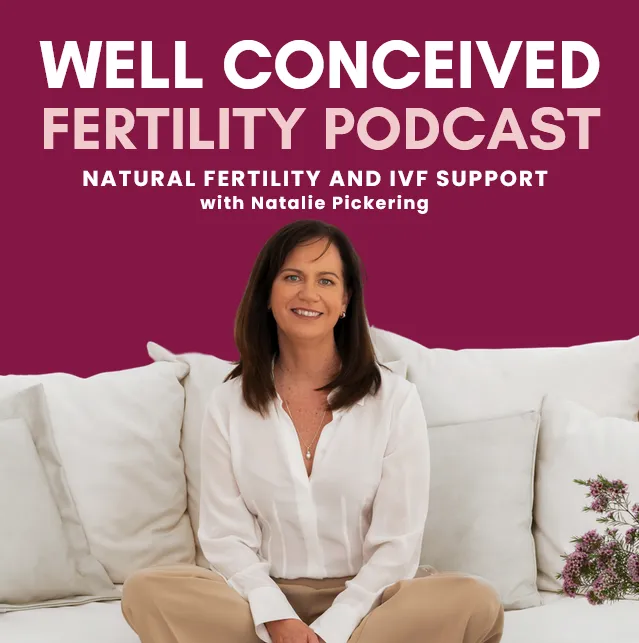
I'm Natalie Pickering, naturopath and fertility specialist with nearly 30 years of clinical experience and I made The Well Conceived Podcast because the standard fertility conversation has a big gap in it, and that gap is costing women time, money, and hope.
Each week I bring you clear, evidence-based education on the things that actually move the needle: egg quality, hormonal patterns, immune health, lining, nervous system regulation, and how to navigate IVF with your eyes open. We go into the science, but we keep it grounded and relatable.

8 Steps To Lower Inflammation and Boost Implantation Success
If you suspect implantation failure is causing your BFNs and you want more support then it might be time to make an appointment - Natalie Pickering
Inflammation is actually a fundamental part of successful implantation. When a fertilized egg enters the uterus, the first step required for successful implantation is the attachment of the egg to the surface of the uterus. This attachment relies on inflammatory changes.
The problem is NOT the short lived, programmed inflammatory changes. Its when inflammation becomes CHRONIC that we see an increase in implantation failure and in recurrent miscarriage. So, how to find out if this could be affecting your implantation success -
Signs of Inflammation Within your Reproductive System-
🔅Endometriosis
🔅Fibroids and Ovarian cysts
🔅Ashermanns
🔅Adenomyosis
🔅PCOS
🔅Pelvic Inflammatory Disease
Signs of Inflammation Outside of Your Reproductive System -
🔅Body pain
🔅Constant fatigue
🔅Depression, anxiety and mood disorders
🔅Brain fog
🔅Constipation, diarrhoea and reflux
🔅Weight gain
🔅Frequent infections .
If any of these signs or symptoms sound familiar and you are concerned about your implantation success it may be time to investigate further. There are 2 blood test that can confirm the presence of chronic inflammation - hsCRP and ESR. These 2 blood tests are simple and inexpensive to run, and definitely worth checking on.
In the meantime here are some of the steps you can take to begin lowering inflammation if you suspect, or have blood tests suggesting you do have chronic inflammation-
8 Steps to lower Inflammation and Boost Implantation Success
1. Lower your intake of inflammatory foods- sugar, cow milk dairy, gluten containing grains, heated vegetable oils (most of), too much red meat in your diet.
2. Boost your intake of anti=inflammatory foods – foods rich in omega-3 fatty acids- cold water fish, such as salmon and tuna, and tofu, walnuts, flax seeds and soybeans. Other anti-inflammatory foods include grapes, celery, blueberries, garlic, olive oil, tea and some spices (ginger, rosemary and turmeric).
3. Boost the health of your gut microbiome with a diverse range of veggies and fruits, plenty of fibre, committing to eating all the colours of the rainbow daily, a dash of fermented foods and a good serve of bone broth.
4. Ensure you have healthy insulin sensitivity - check your fasting blood sugars AND your fasting INSULIN, to be super thorough request a Glucose Tolerance Test and add Insulin at each stage of the test. (Best to have a naturopath help you interpret this).
5. Avoid and minimize exposure to toxicants such as herbicides, pesticides, plasticizers, fragrances and cleaning chemicals.
6. Manage stress well, the research shows conclusively that high cortisol aka-high stress worsens chronic inflammation. Integrating mindfulness, meditation, breathwork, time in nature, yoga will all help.
7. Keep a healthy weight range- being overweight will increase inflammation.
8. There are multiple herbal medicines that work safely and effectively to reduce inflammation. Some of my favourites are: Turmeric, Boswellia, Rosemary, Green Tea, Maritime Pine Bark and Ginger. I've worked with these herbs frequently with my patients and we get excellent results. (I strongly suggest you consult with a professional before self prescribing these herbs, particularly if you are planning an IVF cycle.)
Make sure to begin these steps ahead of your next cycle, most people can see a measurable reduction in inflammation within 2-4 weeks. This is particularly important if you are planning an IVF cycle or an FET cycle, Assisted Reproductive Technology tends to create higher levels of inflammation so its even more important to assess your personal inflammation factors and manage this effectively before starting a cycle.If you suspect implantation failure is causing your BFNs and you want more support then it might be time to make an appointment , or check out my IVF Success System which has a whole module on step-by-step, proven methods to boost implantation success.

If you're in Australia and you're looking for 1:1 fertility support, I practice in Perth, Australia and you are welcome to make an appointment.
I usually have a 5-6 week wait but sometimes earlier appointments come up
Keep in the know!
RECEIVE CAREFULLY CURATED AND RESEARCHED ARTICLES TO SUPPORT YOU IN YOUR HEALTH AND FERTILITY JOURNEY IN YOUR INBOX.
EVENTS
Workshop coming soon
© nataliepickering.COM | ALL RIGHTS RESERVED | TERMS & CONDITIONS | 2024